
Quick summary
- On 2 November 2026, Thailand's Department of Medical Services and the Princess Mother National Institute on Drug Abuse Treatment (PMNIDAT, known as Thanyarak) issued a warning about cannabis-infused snacks, amid news of a Chanthaburi family who fell seriously ill after eating suspected cannabis snacks (the warning itself does not mention that case).
- Edibles take roughly 30 minutes to 2 hours to act, so many people eat more and end up taking too much THC.
- Young children are at particular risk of drowsiness, seizures or unconsciousness and should see a doctor straight away, even if symptoms seem mild.
- Cannabis flower is a controlled herb, and extracts above 0.2% THC by weight remain Category 5 narcotics.
- For seizures, unconsciousness or abnormal breathing, call 1669 immediately.
Where the warning came from
The advisory was published by Hfocus on 2 November 2026, quoting Dr Sakarn Bunnak, Deputy Director-General of the Department of Medical Services, and Dr Thiti Duangsoithong, acting director of the national drug-abuse treatment institute. It comes days after FDA officials and Consumer Protection Police raided a shop in Bangkok's Banthat Thong area and seized about 90 cannabis jellies with no Thai label, which police linked to the Chanthaburi family hospitalised after eating sweets (background: Chanthaburi family hospitalised after eating online-ordered snacks).
Why edibles are riskier than they look
THC is psychoactive. When it is mixed into jelly, candy or chocolate, people usually have no way of knowing how much they are taking, unlike prescribed use where a practitioner sets the dose.
The key problem is delayed onset. Effects begin around 30 minutes to 2 hours after eating and can last several hours. Someone who thinks nothing is happening may eat more, and when everything takes effect at once the result is an overdose.
Symptoms to watch for
Doctors listed these short-term effects:
- Dizziness, drowsiness, confusion
- Palpitations or a racing heart
- Anxiety, paranoia or hallucinations
High doses can cause seizures, loss of consciousness or abnormal breathing. THC can also affect memory, concentration, learning, decision-making and motor control.
On mental health, the warning cites research linking cannabis use to a higher risk of schizophrenia, especially for people who start young, use regularly or use high-THC products, while noting that not every user will develop the condition. See Cannabis benefits and risks.
Young children face the greatest danger
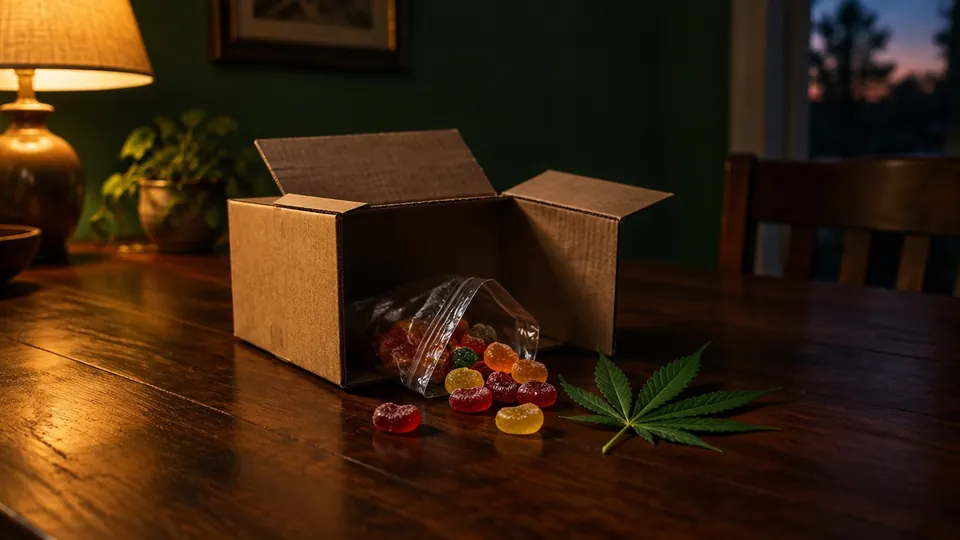
Small children can suffer severe acute poisoning, including heavy drowsiness, seizures or unconsciousness requiring hospital care. Cannabis sweets look like ordinary snacks, so children can easily eat them. Because symptoms may appear late, doctors advise taking a child to hospital as soon as poisoning is suspected.
What the law says about cannabis in food
The advisory restates the rules currently in force:
- Food made for sale must meet Thai FDA safety, licensing and labelling rules for its product type.
- Cannabis flower is a controlled herb under a 2025 Ministry of Public Health announcement, and under MoPH Announcement No. 424 (2021) plant parts including the flower may not be used as food ingredients.
- Medical use requires a prescription from a legally authorised practitioner and must follow medical indications.
- Extracts containing more than 0.2% THC by weight remain Category 5 narcotics under the Narcotics Code.
For which plant parts may be used in food, see Cannabis leaves and food law; for the overall picture, see Thailand cannabis law 2026; and for penalties, see Cannabis penalties in Thailand.
Advice for consumers and families
- Avoid buying or eating snacks with unknown ingredients.
- Check labels and where a product comes from.
- Keep any THC products in sealed containers, out of children's reach.
- Talk to children about the risks of cannabis.
- If poisoning is suspected, especially in a young child, see a doctor immediately; for seizures, unconsciousness or abnormal breathing, call 1669.
This article is general information, not medical or legal advice. cannabis-official.com is not a government agency.