
- Cannabis leaves are not a controlled herb. The Ministry of Public Health announcement in force since 26 June 2025 controls only the flower.
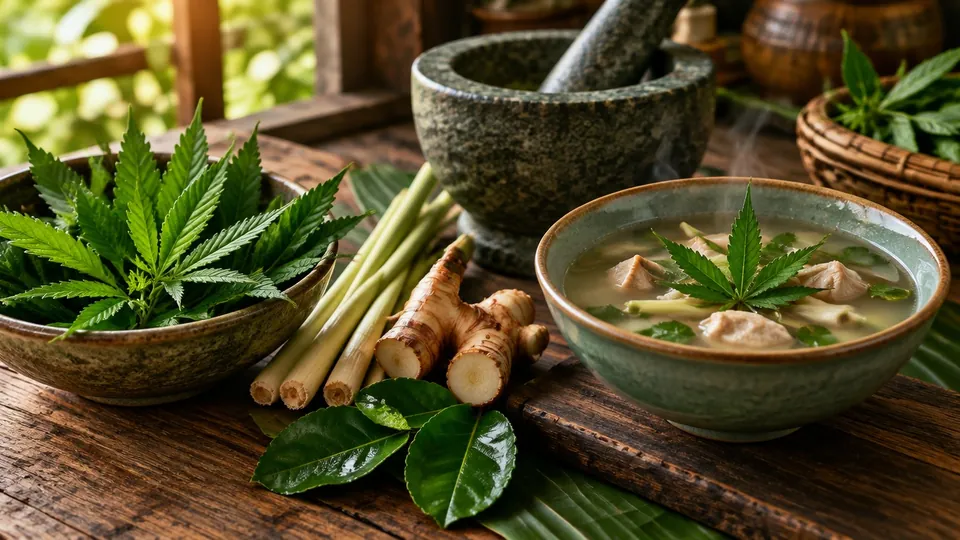
- Leaves can be used in food, but food law applies. Restaurants must tell customers, list dishes and display warnings under a 2022 Department of Health announcement.
- Packaged food for sale needs a Thai FDA food registration number and must meet THC/CBD and labelling rules.
- Groups who should avoid it: children and teenagers, pregnant and breastfeeding women, and people sensitive to THC/CBD.
- The draft Cannabis Control Act approved by the Cabinet exempts the sale of leaves, roots, branches, stems and seeds from licensing, but it is not yet in force.
Cannabis leaves have drawn a lot of interest in Thailand since 2022, from diners wondering whether they are safe to eat to restaurants planning cannabis-leaf menus. Since the government pulled cannabis back to a "medical use only" system, many people are unsure whether leaves are still allowed. This article sums up the position as of October 2026 using sources we could verify.
Are cannabis leaves legal? Which parts are controlled
The Ministry of Public Health Announcement on Controlled Herbs (Cannabis) B.E. 2568 was published in the Royal Gazette on 25 June 2025 and took effect the next day. Clause 3 makes only the flower of the Cannabis genus a controlled herb (Thai PBS). Daily News likewise reported that the new rules target the flower specifically rather than other parts of the plant.
As a result, leaves, roots, stems and branches are not on the controlled-herb list. Extracts with more than 0.2% THC remain Category 5 narcotics under the announcement effective 9 June 2022 (PPTV).
| Plant part | Status as of Oct 2026 | Allowed in food? |
|---|---|---|
| Flower | Controlled herb (since 26 Jun 2025); sold only by licensees on prescription | No, under Thai FDA food rules |
| Leaves | Not a controlled herb | Yes, under food law |
| Roots, stems, branches, bark, fibre | Not a controlled herb | Yes, under food law (MOPH Notification No. 427 as amended) |
| Cannabis seeds | Not a controlled herb | The Tilleke guide says not allowed in food (unlike hemp seeds) |
| Extracts above 0.2% THC | Category 5 narcotic | No |
For the full legal picture see Thailand cannabis law 2026, and for the difference between cannabis and hemp leaves see Hemp in Thailand: is it legal?
What the draft Cannabis Control Act means for leaves
Hfocus reported that the Cabinet approved the draft Cannabis Control Act on 22 September 2026. The bill requires licences to grow, produce, import, export and sell cannabis, but exempts the sale of roots, branches, stalks, leaves, stems and seeds from licensing. Bangkok Biz News reported the same point in July 2026 and noted that the advertising ban covers flower, resin and smoking equipment.
Caveat: the draft Act is not in force and is still under review before it goes to Parliament. The leaf exemption could change, as could the secondary regulations that follow. The reports we read do not discuss food, so it is not yet clear how the bill will interact with Thai FDA and Department of Health food rules.
What restaurants using cannabis leaves must do
The main rule for food businesses is the Department of Health Announcement on Using Cannabis Leaves in Preparing or Cooking Food in Food Establishments B.E. 2565 (2022), as amended. It applies to "food business establishments", such as restaurants. As summarised by Thai PBS and PPTV, operators must:
- Tell customers the outlet serves dishes containing cannabis.
- List every dish containing cannabis leaves and the number of leaves in each.
- Display advice on safe consumption and warnings for at-risk groups.
- Make no claims that the food prevents or treats disease.
- Store leaves cleanly and separately, free of mould and spoilage (amendment of June 2022).
Suggested leaf amounts reported in 2022: 1–2 fresh leaves per fried dish, and 1 fresh leaf per stir-fry, curry, soup or drink. The director of the Department of Health's legal division also advised diners to eat no more than two cannabis dishes per meal (InfoQuest).
Note: these figures date from 2022. We found no report that this Department of Health announcement has been repealed, but we also found no 2025–2026 source reconfirming it. Operators should check with their district office or provincial public health office before relying on these numbers.
If you are planning a business around flower or other cannabis products, the rules are very different from a restaurant's. See Opening a cannabis shop in 2026.
Does packaged food need Thai FDA approval?
PPTV reported the Thai FDA deputy secretary-general's 2022 explanation:
- Food cooked for on-site sale or delivery does not need Thai FDA approval, but must follow the Department of Health announcement.
- Packaged food produced for sale needs a production-site licence and a food registration number (in Bangkok via the FDA Food Division; elsewhere via the provincial public health office).
- Products using stems, bark, fibre, branches, roots and leaves with no flower attached fall under MOPH Notification No. 427 (2021).
In October 2022, No. 427 was amended by No. 438, according to InfoQuest. It set THC and CBD caps, for example no more than 1.6 mg THC per package for general foods, and requires labels warning against exceeding the recommended serving and against combining the product with other cannabis foods. The Tilleke & Gibbins guide (2025) adds that ingredients must come from plants grown in Thailand, that cannabis parts may not go into infant food, young children's food or energy drinks, and that importing food containing cannabis is prohibited.
Can you eat cannabis leaves? Risks and who should avoid them
Cannabis leaves contain varying amounts of THC and CBD depending on the strain and how they are cooked. Heat and fat affect how much is extracted, which is why the guidance above suggests fewer leaves for fried dishes. (For the basics, see THC vs CBD explained.)
Warnings the Department of Health requires outlets to display include:
- Children and teenagers should avoid it (most reports say under 18; a later InfoQuest report of the ministry's explanation says under 20).
- Pregnant and breastfeeding women should not consume it.
- People allergic or sensitive to THC or CBD should be careful.
- It may cause drowsiness, so avoid driving or operating machinery.
- Stop eating immediately if unusual symptoms appear.
Department of Health officials have also warned that regularly exceeding the guidance can lead to dependence and, in severe cases, can be life-threatening (InfoQuest). People on regular medication, with heart conditions or other chronic illnesses should talk to a doctor or pharmacist first, as cannabis compounds may interact with some medicines.
Tips for diners
- Look for signage. A compliant outlet should state which dishes contain cannabis leaves and how many.
- Don't stack dishes, especially fried dishes together with stir-fries.
- Read packaged-food labels for a food registration number, warnings and a recommended serving.
- Be wary of health claims. Food may not claim to cure disease.
- Don't drive after eating cannabis food if you feel drowsy or light-headed.
- Know leaves from flower. Food or snacks made with flower fall outside the framework described here.
This article is general information, not legal or medical advice, and we do not promote recreational cannabis use.
FAQ
Are cannabis leaves legal in Thailand in 2026?
The controlled-herb announcement in force since 26 June 2025 covers only cannabis flower, so leaves are not a controlled herb. Using leaves in food is still subject to food law and Department of Health rules.
Do restaurants need Thai FDA approval to serve cannabis-leaf dishes?
According to the Thai FDA's 2022 explanation, food cooked and sold on site or for delivery does not need FDA approval, but it must follow the Department of Health's disclosure and warning rules. Packaged food produced for sale needs a food registration number.
Can I eat cannabis leaves, and who should avoid them?
The 2022 Department of Health rules say children and teenagers, pregnant women and breastfeeding women should avoid cannabis food. People allergic or sensitive to THC or CBD should be careful, and anyone with unusual symptoms should stop eating immediately.
How many cannabis leaves can go in one dish?
The Department of Health's 2022 guidance was 1–2 fresh leaves for a fried dish and 1 fresh leaf for stir-fries, curries, soups and drinks. We found no newer rule replacing these figures, but also no 2026 source reconfirming them.
Will the draft Cannabis Control Act ban selling cannabis leaves?
Under the version the Cabinet approved on 22 September 2026, selling roots, branches, leaves, stems and seeds is exempt from licensing. The bill is not yet law and could still change.
Sources
- Thai PBS — Royal Gazette publishes control of cannabis flower, effective 26 Jun 2025
- Daily News — Inside the MOPH announcement controlling cannabis flower: no smoking, no advertising
- Hfocus — Cabinet approves draft Cannabis Control Act; minister says medical use only
- Bangkok Biz News — Key points of the draft Cannabis Control Act: medical use only, no advertising
- Thai PBS — Conditions for cooking with cannabis leaves
- PPTV — MOPH tells operators to list cannabis dishes, suggests 1–2 fresh leaves per dish
- InfoQuest — MOPH confirms restaurants must warn customers about cannabis in food and drinks
- InfoQuest — MOPH explains rules on cooking with cannabis: disclosure and consumer warnings
- PPTV — Restaurants selling cannabis/hemp menus and food registration numbers
- InfoQuest — MOPH revises announcements limiting cannabis and hemp in food
- Tilleke & Gibbins — Cannabis and Hemp Business Guide Thailand 2025