
Quick summary
- On 23 Oct 2026, Thai government agencies and industry groups outlined plans to raise cultivation and production standards for cannabis, hemp and kratom to compete in Asia's health and herbal-products market.
- The core is GACP (Good Agricultural and Collection Practices), at both Thai and international level.
- Every production batch must be lab-tested for microbes, heavy metals, pesticide residues and moisture.
- No new law is involved: cannabis flower remains a controlled herb and online sales stay banned.
What happened
On 23 October 2026, The Nation reported that Thailand is raising its medical, cultivation and production standards for three plants — cannabis, hemp and kratom — to strengthen its position in the regional health and herbal-products market. Public- and private-sector sources agreed that future growth will depend on scientific evidence, product safety and international standards rather than on volume.
This fits the policy direction throughout 2026, in which the government restricted cannabis to medical use only and tied cultivation, distribution and processing more closely to medical requirements and GACP. For the overall legal picture, see Thailand cannabis law 2026.
What GACP is and why it matters
GACP stands for Good Agricultural and Collection Practices — a set of good-practice rules for growing and harvesting medicinal plants. The certification schemes mentioned include Thai GACP, organic cultivation and Global GACP for export markets.
The Division of Medical Cannabis at the Department of Thai Traditional and Alternative Medicine (DTAM) runs the Thailand Cannabis GACP certification system and publishes a list of certified cultivation sites. Its deputy director said consumer confidence has to start at the farm.
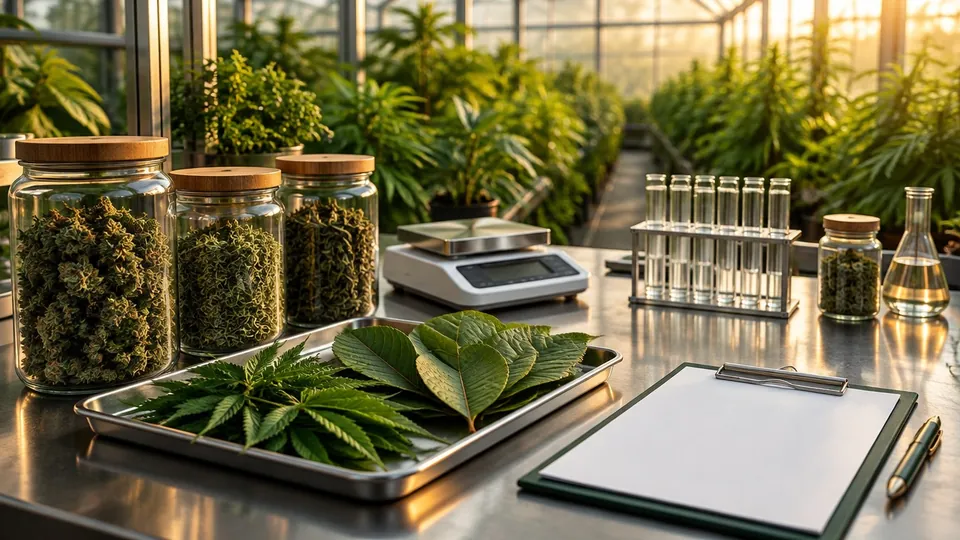
In practice, each batch must be sent for laboratory testing for microbial contamination, heavy metals, pesticide residues and excess moisture. These results are what domestic and overseas buyers rely on.
Views from government and industry
- Medical use: The president of the Senior Health Service and Trade Association said cannabis and kratom extracts may help in elderly and palliative care and for some symptoms such as insomnia, anxiety and pain, but stressed use must follow proper indications, evidence and safety standards.
- Plant varieties: The Department of Agriculture's Cannabis, Hemp and Kratom Research Group is researching varieties and farm-level production controls so raw materials meet international standards.
- Hemp market: The president of the Asia International Hemp Federation said Thailand's global share is still small but could grow significantly within three to five years if government and business coordinate on standards, investment and value-added products.
- Kratom: A kratom specialist said local varieties and climate are a competitive advantage and urged processed products rather than raw leaves.
Health benefits and risks still need careful assessment — see cannabis benefits and risks.
Current law is unchanged
This is a standards and market story, not a new law. The rules in force remain:
- Cannabis flower is a "controlled herb" under a Public Health Ministry notification; commercial sale requires authorisation.
- Online and electronic sales of flower are banned.
- Extracts with more than 0.2% THC remain a Category 5 narcotic; producing or exporting them requires a specific licence.
- The Cannabis Control Bill is still under review and not yet in force.
Anyone planning commercial hemp cultivation or processing should read hemp law in Thailand and check licence conditions before investing. For retail, see opening a cannabis shop in 2026.
Related event
The Asia International Hemp Expo & Forum 2026 and Asia International Cannabis Expo & Forum 2026 are scheduled for 18–20 November 2026 at the Queen Sirikit National Convention Center in Bangkok. Organisers expect at least 5,500 industry professionals.
What businesses should prepare
- Check whether your farm or raw-material supplier holds GACP certification.
- Keep lab results for every batch on file.
- Make sure all relevant licences are in place, especially for extracts or exports.
- Follow the Cannabis Control Bill, which may change the licensing system.
This article is general information, not legal advice. cannabis-official.com is not a government agency.