
The short version (Oct 2026)
- Hemp is a low-THC type of Cannabis (no more than 1.0% THC in dried leaves and flowers)
- Hemp plant parts are no longer narcotics, but extracts with more than 0.2% THC remain Category 5 narcotics
- Hemp flower should be treated as a controlled herb, like cannabis flower: selling needs a licence and buyers need a prescription
- Seeds, seed oil, leaves, stalks and CBD can go into food and cosmetics with Thai FDA approval, using Thai-grown raw material
- The draft Cannabis Control Act, approved by the Cabinet on 22 Sep 2026, is not yet in force
What is hemp?
Hemp (กัญชง) belongs to the same genus, Cannabis, as the plant Thais call กัญชา. The key legal difference is THC (tetrahydrocannabinol), the compound responsible for intoxication. A 2019 Narcotics Control Board notification on the characteristics of hemp set the threshold: hemp and certified hemp seed must contain no more than 1.0% THC by dry weight in the leaves and flower tops. The November 2025 edition of law firm Tilleke & Gibbins' cannabis and hemp business guide still uses this definition, describing hemp as Cannabis sativa L. subsp. sativa within that limit.
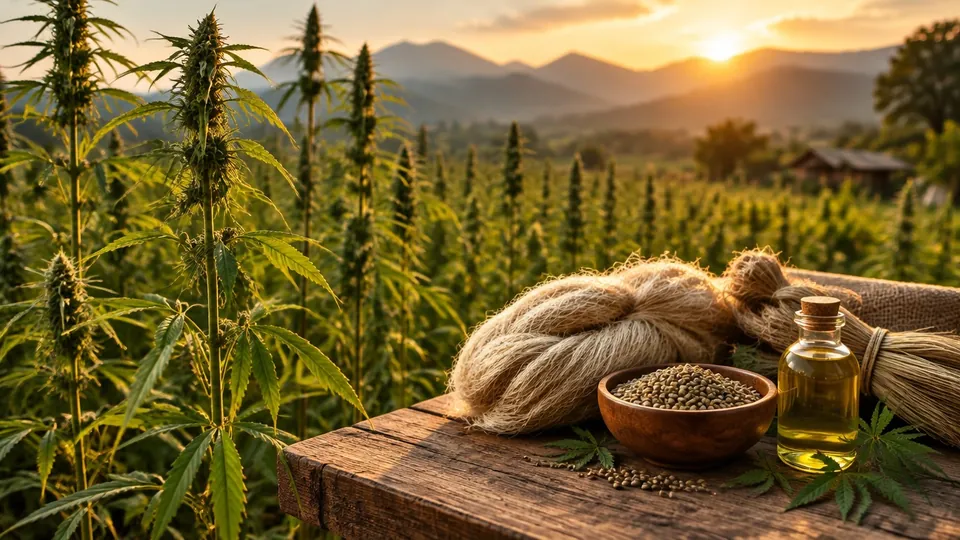
When the Thai FDA explained the threshold in 2019, it said the rule was meant to open hemp up to uses beyond fibre, including medicines, herbal products, food, cosmetics, textiles and heat insulation.
Hemp vs cannabis in Thailand
| Issue | Hemp | Cannabis |
|---|---|---|
| Legal definition | C. sativa subsp. sativa with no more than 1.0% THC by dry weight in leaves and flowers | C. sativa subsp. indica (per Tilleke) |
| Main uses | Fibre, seeds, seed oil, seed protein, CBD extract | Medical use under a licensed practitioner |
| Seeds and seed oil in food | Allowed (Thai FDA licence required) | Not allowed |
| Flower | Should be treated as a controlled herb (see below) | Controlled herb since 26 Jun 2025 |
| Extracts above 0.2% THC | Category 5 narcotic | Category 5 narcotic |
| Flower in food/cosmetics | Prohibited | Prohibited |
In practice, many rules treat both plants the same, because several regulations are written to cover "cannabis or hemp" or the whole Cannabis genus.
Is hemp legal in Thailand? Where things stand
1. Not a narcotic, except high-THC extracts. The Ministry of Public Health's 2022 announcement listing Category 5 narcotics covers extracts from any part of cannabis or hemp, but exempts extracts with no more than 0.2% THC by weight (from domestically grown plants licensed for extraction) and extracts from domestically grown seeds. The Tilleke guide notes that plant parts were taken off the narcotics list on 9 Jun 2022.
2. Flower is controlled. The Ministry of Public Health's controlled-herb announcement (cannabis), effective 26 Jun 2025, makes the flower of "plants in the genus Cannabis" a controlled herb. It does not mention hemp separately. Because it uses a genus-level definition that hemp falls within, and because the 2022 version explicitly covered the flowers of both cannabis and hemp, hemp flower should be treated under the same rules: a licence is needed to sell or process it commercially, sales to the public are only allowed against a licensed practitioner's prescription for up to 30 days' supply, and online sales, vending machines and advertising are banned.
3. Who may sell flower. A ministerial regulation published in the Royal Gazette on 29 Apr 2026 and effective 30 Apr 2026 limits sales licence applicants to healthcare facilities, premises that make or sell herbal medicines and products, and certified traditional village healers, with trained staff on site. See How to open a cannabis shop in 2026.
4. Growing. According to the Tilleke guide (Nov 2025), Thai nationals may grow hemp without a licence but must record cultivation through the Thai FDA's PlookGanja app, and agriculture, including hemp growing, is reserved for majority Thai-owned companies. Hemp seed may be imported under the Plant Act and Plant Quarantine Act, administered by the Department of Agriculture.
Hemp in food, cosmetics and CBD products
Under the Tilleke guide, food made in Thailand may contain hemp seeds, seed oil, seed protein, non-flower plant parts and CBD extract, provided the plants were grown in Thailand and the maker holds a licence under the Food Act. Cosmetics follow the same approach under the Cosmetics Act, while herbal products need a licence and registration under the Herbal Product Act.
Key restrictions:
- No hemp or cannabis in infant food, young children's food or caffeinated (energy) drinks
- No flower in food or cosmetics
- No imports of food or cosmetics containing hemp or cannabis ingredients
The Thai FDA Food Division advises consumers to check that packaged products show a food registration number, state the plant part or CBD extract used, and carry warnings such as advice that children and pregnant or breastfeeding women should not consume them. Producers who want to sell must register both the production site and the product.
On health benefits: this article gives no health or dosing advice. The Tilleke guide says only that CBD is non-intoxicating, and the Thai FDA requires hemp-based supplement labels to state that the product does not prevent or treat disease. Anyone considering cannabis for treatment should see a licensed practitioner — see Using cannabis legally in Thailand.
How will the Cannabis Control Bill affect hemp?
The Cabinet approved the draft Cannabis Control Act on 22 Sep 2026, and Thai PBS Policy Watch reports that the 77-section bill has been under review by the Council of State since 6 Oct 2026, before it goes to Parliament.
The version circulated for public comment in mid-2026 covered hemp alongside cannabis. Thansettakij reported that the bill was originally titled as a cannabis and hemp act before being renamed, and that it required licences to grow, produce, import, export and sell hemp and its extracts, just as for cannabis, along with a ban on sales to people under 20 and pregnant or breastfeeding women. Hfocus reported that the bill would set up a national cannabis and hemp committee.
However, coverage of the Cabinet approval did not go into hemp, and the approved text has not been published, so it is not yet possible to confirm what hemp-specific thresholds or exemptions (for fibre or seeds, for example) the final law will contain. For the bigger picture, see Thailand cannabis law 2026 and the Thai cannabis law timeline.
Hemp and cannabis rules in Thailand change often. This page reflects the situation as of 11 Oct 2026 and is not legal advice. Before growing, making or selling hemp products, check with the Department of Thai Traditional and Alternative Medicine, the Thai FDA or your provincial public health office.
Bottom line
Hemp is the low-THC form of cannabis that Thai law defines separately, with real uses in fibre, seeds and CBD. But "not a narcotic" does not mean unregulated: hemp flower should be treated as a controlled herb, high-THC extracts remain narcotics, and food or cosmetic products need Thai FDA approval. The draft Cannabis Control Act could change these details once it takes effect.
FAQ
Is hemp legal in Thailand?
Hemp plant material is no longer a narcotic in Thailand, but extracts with more than 0.2% THC by weight still are. Hemp flower should be treated as a controlled herb like cannabis flower, and food or cosmetics containing hemp need Thai FDA approval.
What is the difference between hemp and cannabis in Thailand?
Both belong to the genus Cannabis. Thai rules define hemp as Cannabis sativa L. subsp. sativa with no more than 1.0% THC by dry weight in its leaves and flowers, so it is mainly used for fibre, seeds and CBD.
Can I buy hemp flower in Thailand?
The 2025 controlled-herb announcement covers the flower of plants in the genus Cannabis and does not carve out hemp, so hemp flower should be treated the same as cannabis flower: it can only be sold by licensed sellers against a practitioner's prescription.
Are CBD products legal in Thailand?
Food and cosmetics with CBD extract may be made in Thailand if the raw material comes from Thai-grown plants and the maker holds a Thai FDA licence. Importing food or cosmetics containing hemp or cannabis ingredients is prohibited.
Sources
- Thai PBS — Royal Gazette publishes controlled-herb rule for cannabis flower, effective 26 Jun 2025
- Bangkok Biz News — New regulation on selling cannabis flower in force, only 3 types of premises allowed
- Hfocus — Cabinet approves draft Cannabis Control Act; minister says medical use only
- Thai PBS Policy Watch — Draft Cannabis Control Act goes to the Council of State for review
- Thansettakij — Closing the door on free cannabis: draft Cannabis Control Act bans smoking and online sales
- Hfocus — DTAM submits draft Cannabis Control Act to the Public Health Minister
- Thai Post — Royal Gazette publishes MOPH announcement listing Category 5 narcotics, 2022
- Thai PBS — Thai FDA explains THC limit to enable hemp use (2019)
- Mondaq / Tilleke & Gibbins — Cannabis and Hemp Business Guide: Thailand (Nov 2025)
- Thai FDA Food Division — FAQ: food products containing cannabis and hemp
- Matichon — Latest rule controlling cannabis flower explained (Nov 2022)