
Quick summary
- Cannabis oil is a cannabis extract dissolved in oil, containing THC and/or CBD.
- Extracts with more than 0.2% THC by weight remain Category 5 narcotics. A new ministerial regulation in force since 26 April 2026 allows them to be produced, sold and possessed only for four purposes, including medical use.
- The safe route is through a trained doctor or dentist at a licensed healthcare facility.
- The Department of Medical Services groups conditions into three evidence levels and does not recommend cannabis as first-line treatment.
- Unlabelled oils sold online carry risks of THC toxicity, contamination and legal liability.
Please note: This article is general information, not medical or legal advice, and it contains no dosing information. Consult a licensed practitioner before making any decision. Thai cannabis law is changing; information is current as of 11 October 2026.
What is cannabis oil? THC vs CBD
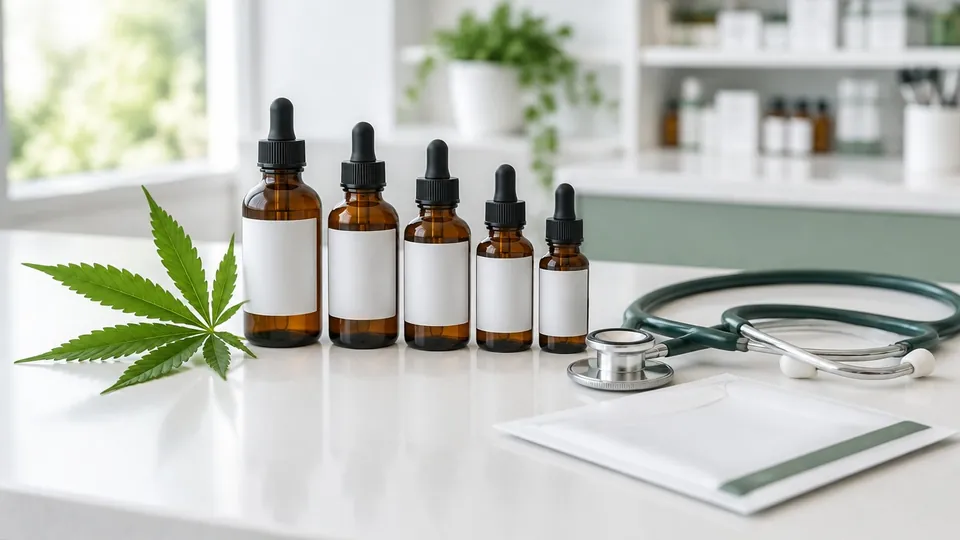
Medical cannabis oil is an extract of the cannabis plant prepared as an oil taken under the tongue. The Department of Medical Services (DMS) Guidance on Cannabis for Medical Use (6th revision, 2024) describes two main active compounds:
- THC (delta-9-tetrahydrocannabinol) acts on the mind and nervous system. It produces intoxication and carries psychiatric risks.
- CBD (cannabidiol) is not addictive, and there is evidence that it reduces some of THC's side effects.
Products in the Thai public health system are therefore grouped by ratio: THC-dominant, THC:CBD 1:1 and CBD-dominant. Each has different indications and different prescribers. This is why "what is medical CBD?" matters: two bottles both labelled "cannabis oil" can have very different effects and risks.
Legal status of cannabis oil in 2026
Many people assume that when cannabis was "unlocked" in 2022, every kind of cannabis oil became legal too. In fact, the 2022 Ministry of Public Health notice on Category 5 narcotics exempted only extracts with no more than 0.2% THC by weight, extracted under licence from domestically grown plants. Extracts above that level stayed Category 5 narcotics, as Thai Post reported.
In 2026 a new ministerial regulation on Category 5 cannabis and hemp extracts was published in the Royal Gazette on 26 March and took effect on 26 April 2026, according to Bangkok Biznews and The Nation. Key points:
| Issue | Ministerial regulation on extracts (in force 26 April 2026) |
|---|---|
| Permitted purposes | Drug-law enforcement, medical use, analysis/education/research, industrial use |
| Medical producers | Non-foreign juristic persons, government agencies or the Thai Red Cross, holding a modern-medicine or herbal-product manufacturing licence (or an exemption) |
| Sellers | Only licensed producers or importers, selling to other licensees |
| Possession | Only those whose duties or operations relate to medical or industrial purposes |
| Transition | Licences under the previous rules remain valid until 31 December 2026 |
The separate ministerial regulation effective 30 April 2026, which restricts the types of seller, concerns shops selling cannabis flower, a controlled herb since 26 June 2025 (Thai PBS). It is not the extract licensing regime. For the full picture see Thailand cannabis law 2026.
Most recently, the Cabinet approved the draft Cannabis Control Bill on 22 September 2026. The draft requires cannabis or its extracts to be used for treatment under the care of a medical professional or for approved research (Hfocus), but it is not yet in force.
Who can produce, prescribe and dispense cannabis oil
The DMS guidance states that medical cannabis products should be prescribed by doctors or dentists who have completed a Ministry of Public Health-accredited course.
Products on the National List of Herbal Essential Medicines (2023), per the 6th revision, fall into three groups:
- CBD-dominant: for hard-to-treat and drug-resistant epilepsy, prescribed by paediatric neurologists or doctors experienced in treating difficult epilepsy.
- THC:CBD 1:1: add-on treatment for late-stage cancer patients with insomnia, poor appetite, or moderate-to-severe pain not controlled by standard drugs.
- THC-dominant: the same indication, plus add-on treatment for chemotherapy-induced nausea and vomiting.
The guidance also lists producers of cannabis extract medicines in the system: the Government Pharmaceutical Organization (GPO), Chao Phya Abhaibhubejhr Hospital, Khu Mueang Hospital (Buriram), and products from the Department of Thai Traditional and Alternative Medicine such as the "Metta Osot" and "Karun Osot" formulas. InfoQuest reported that the essential-medicine products are used in hospitals and public health facilities.
As for Ajarn Decha's oil formula, Matichon reported in 2019 that a Department of Thai Traditional and Alternative Medicine committee had given it preliminary approval as a folk healer's formula. We found no 2025–2026 document confirming its current status, so ask a healthcare facility directly.
How patients obtain cannabis oil legally
- See your regular doctor first. The DMS guidance stresses that cannabis oil is for cases where standard treatment has not worked or causes intolerable side effects, and that it should be an add-on, not a replacement.
- Attend a medical cannabis clinic at a public hospital or licensed healthcare facility. The doctor will take a history, review your current medicines, and explain the benefits and risks.
- Make a shared decision and give consent. The guidance calls for a treatment agreement and ongoing follow-up.
- Receive the medicine from the treating facility, with instructions as prescribed by your doctor.
For more on lawful access, see How to use cannabis legally in Thailand. Operators interested in providing services can read How to open a cannabis clinic.
Note: the Department of Thai Traditional and Alternative Medicine limits medical prescribing of flower to five symptom groups (insomnia, chronic pain, migraine, Parkinson's disease and loss of appetite), as Bangkok Biznews reported. That is a separate system from the extract oils on the essential medicines list.
What can cannabis treat? Evidence levels per Thai guidance
The 6th revision (2024) groups conditions into three categories:
| Evidence group | Conditions (per DMS guidance) | Notes |
|---|---|---|
| Benefit (clear, quality evidence) | Chemotherapy-induced nausea and vomiting; hard-to-treat/drug-resistant epilepsy (e.g. Dravet, Lennox-Gastaut in children); spasticity in multiple sclerosis; central neuropathic pain; loss of appetite in underweight AIDS patients; improving quality of life in palliative/end-of-life care | Not recommended as first-line; used alongside standard treatment |
| Probable benefit (limited quality evidence) | Parkinson's disease; Alzheimer's disease; generalised anxiety disorder; other demyelinating diseases such as neuromyelitis optica | Case-by-case use with research data collection |
| Possible future benefit (insufficient evidence) | Treating cancer | Needs more research; patients should receive standard care |
Cancer is where claims are most often distorted. The guidance warns that using cannabis in place of standard treatment may cost patients the chance of effective therapy. Relieving symptoms in late-stage cancer is different from "curing cancer." Advertising that cannabis oil "cures everything" has no evidence behind it, and the Thai FDA has warned that exaggerated health claims are punishable (InfoQuest).
Side effects, who should not use it, and drug interactions
Side effects to know — The DMS guidance lists effects that may lead a doctor to adjust treatment, such as dizziness, loss of coordination, slow heart rate and abnormal blood pressure, and effects that mean stop immediately, such as confusion, agitation, anxiety, hallucinations or psychosis. Avoid driving or operating machinery for at least six hours after use, and do not combine with alcohol.
Who should not use THC-containing products (contraindications in the guidance):
- People allergic to cannabis products or to the solvents used in extraction
- People with severe or unstable heart and blood-vessel disease, or with risk factors for it
- People with a history of psychosis, or a current mood or anxiety disorder
- Pregnant or breastfeeding women, and women of reproductive age not using contraception or planning pregnancy
Groups needing extra caution include young patients (the guidance's appendix on self-use recommends use only from age 25 and not under 18; children with hard-to-treat epilepsy are managed by specialists), people with liver disease, people with substance dependence or heavy drinking, children and older adults.
Drug interactions — THC and CBD are processed by the liver's CYP450 enzymes and can raise or lower levels of other medicines. The guidance cites examples such as the blood thinner warfarin, certain anti-seizure drugs, opioids and sedatives. Tell your doctor about every medicine and herbal product you take.
The dangers of illegal and unlabelled oils sold online
Oils sold on social media often state no THC/CBD content, carry no registration number and have not been tested for contaminants. The DMS guidance says medical products must be free of heavy metals, pesticides and fungi. The Ramathibodi Poison Center advises choosing properly registered products (Thai PBS).
THE STANDARD reported a case of a patient who took excessive oil drops and suffered hallucinations, a racing heart and inability to walk, alongside a warning that substituting oil for an effective existing treatment can be harmful. In addition, if the oil contains more than 0.2% THC, unlicensed possession may be a Category 5 narcotics offence.
Red flags to avoid: no label or registration number; claims to cure everything or cure cancer; sales via chat with no licensed professional involved; advice to stop medicines your doctor prescribed.
In short, cannabis oil is an add-on option for specific patient groups only, and it should come through a licensed practitioner. Follow legal changes at Thailand cannabis law 2026.
FAQ
Is cannabis oil legal in Thailand in 2026?
It depends on the THC content. Extracts with more than 0.2% THC by weight are still Category 5 narcotics, and under a ministerial regulation in force since 26 April 2026 they may only be produced, sold or possessed for set purposes such as medical use. Patients should obtain oil only through licensed practitioners and healthcare facilities.
What conditions can medical cannabis oil treat in Thailand?
Department of Medical Services guidance lists clear evidence for conditions such as chemotherapy-induced nausea and vomiting, hard-to-treat childhood epilepsy, spasticity in multiple sclerosis and central neuropathic pain, always as an add-on when standard treatment has failed. Evidence for treating cancer itself is insufficient.
What is the difference between CBD and THC oil?
THC is psychoactive, while CBD is not addictive. In Thailand, CBD-dominant oil is used for hard-to-treat epilepsy in children and is prescribed by specialist doctors, while THC-containing oils are used for symptoms such as nausea, pain and poor appetite in specific patient groups.
Can I buy cannabis oil online in Thailand?
It is not advisable. Oils sold online are often unlabelled, of unknown strength and possibly contaminated, and oil with more than 0.2% THC is still a Category 5 narcotic, so unlicensed possession carries legal as well as health risks.
Sources
- Department of Medical Services — Guidance on Cannabis for Medical Use, 6th revision (2024)
- Asia News Network / The Nation — Thailand's new cannabis-hemp extract rules take effect, limiting use to four purposes
- Bangkok Biznews — New ministerial regulation on cannabis and hemp extracts now in force
- Thai Post — Royal Gazette publishes MoPH notice removing cannabis from Category 5
- Thai PBS — MoPH notice on cannabis as a controlled herb, 2025
- Hfocus — Cabinet approves draft Cannabis Control Bill; minister says medical use only
- InfoQuest — GPO cannabis extract oils listed in the National List of Herbal Essential Medicines
- Matichon — Ajarn Decha's cannabis oil formula certified
- Bangkok Biznews — Thai Traditional Medicine department: medical cannabis limited to 5 symptom groups
- Thai PBS — 10 precautions when using cannabis products
- THE STANDARD — Doctor warns of multiple risks from excessive cannabis oil drops
- InfoQuest — Thai FDA warns against exaggerated cannabis and hemp claims